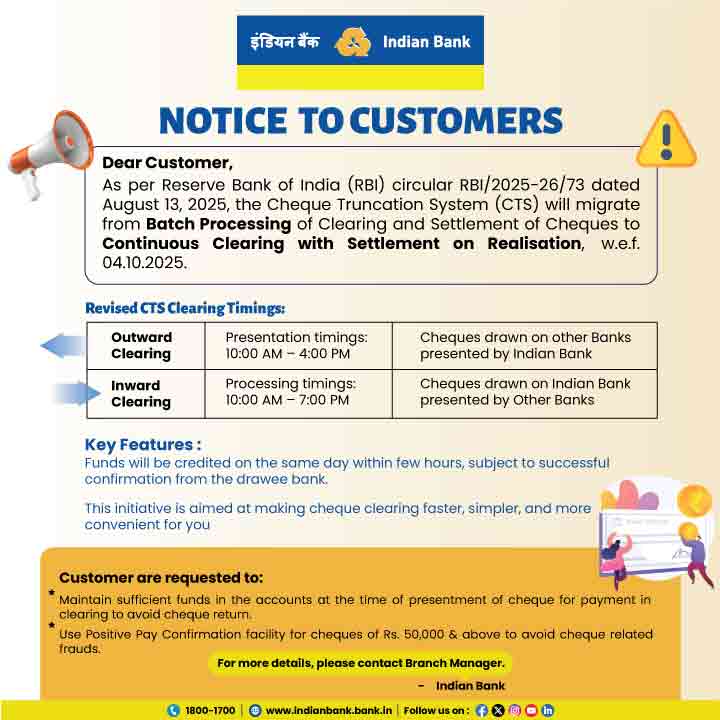










Understanding Cheque Dishonour: Common Reasons and Smart Precautions
Although digital payments are widely used today, cheques continue to play an important role in business transactions, rent payments, loan repayments, formal agreements, etc. However, cheque bouncing remains a common issue that can lead to financial penalties, legal complications and reputational damage.
Understanding why cheques bounce and how to prevent it is essential for both issuers and recipients. This guide explains the common causes and practical steps to avoid such situations.
What Does Cheque Bouncing Mean?
A cheque is said to have bounced when the Bank refuses to process it. This typically happens when the Bank cannot honour the payment mentioned on the cheque. When a cheque is dishonoured, the issuing Bank returns it to the depositor along with a memo stating the reason for non-payment.
Cheque bouncing is not merely an inconvenience. It may attract penalty charges from the Bank and, in certain cases, legal action under Section 138 of the Negotiable Instruments Act, 1881.
Common Reasons Why Cheques Bounce
One of the most frequent reasons for cheque bouncing is insufficient funds. If the account does not have enough balance to cover the amount written on the cheque, the Bank will decline the payment.
Another common reason is a mismatch in signature. Banks verify the signature on the cheque against their records. If the signature differs significantly, the cheque may be rejected.
Errors in cheque details can also cause dishonour. Incorrect date, overwriting, spelling mistakes in the payee’s name or discrepancies between the amount written in words and figures can lead to rejection.
Post-dated or stale cheques are additional causes. A cheque presented before the date mentioned on it cannot be processed. Similarly, a cheque presented after its validity period, usually three months from the date of issue, is treated as stale and may bounce.
Account-related issues may also result in cheque return. If the account is closed, frozen, blocked or under legal restriction, the Bank will not process the cheque. Additionally, changes in the mode of operations viz., self, either or survivor, former or survivor, etc., in which account mandate is changed after the cheque has been issued, may also lead to dishonour if the cheque does not comply with the updated account instructions. Care should be taken to ensure that the mode of operations is periodically updated and duly noted by the issuer of the cheque.
Technical reasons, such as damage to the cheque, torn edges or unclear magnetic ink characters, can also lead to processing failure.
Consequences of Cheque Bouncing
When a cheque bounces, the Bank usually levies a penalty on the issuer. In some cases, the recipient’s Bank may also charge a fee.
Beyond financial penalties, cheque bouncing can affect credibility, especially in business transactions. Repeated dishonour may damage professional relationships.
In certain circumstances, issuing a cheque without sufficient funds may lead to legal proceedings. The payee has the right to send a legal notice and seek remedy as per applicable regulations.
How to Avoid Cheque Bouncing
- The most effective way to prevent cheque bouncing is to maintain sufficient balance in the account. Before issuing a cheque, ensure that adequate funds are available and that no other pending transactions will reduce the balance below the cheque amount.
- Regularly monitoring account statements and setting balance alerts can help manage funds more efficiently.
- Always write cheques carefully. Avoid overwriting and ensure that the amount in words matches the amount in figures. Use clear handwriting and fill in all required details correctly.
- Keep your signature consistent with the one registered with the Bank. If your signature has changed over time, update it with your Bank to avoid mismatches.
- Be mindful of cheque validity. Do not issue post-dated cheques unless necessary, and ensure that cheques are deposited within the valid time frame.
- If you anticipate insufficient funds, inform the recipient in advance and explore alternative payment methods such as Bank transfers or digital payments.
Cheque bouncing can cause financial strain, inconvenience and potential legal issues. However, most cases occur due to avoidable errors or lack of balance awareness. Awareness and responsible financial management remain the key to preventing cheque bouncing and maintaining trust in financial transactions.
Indian Bank. “Your Own Bank, Always with You”
Disclaimer: https://indianbank.bank.in/departments/disclaimer/